
How to Build an EDH Reanimator Deck

What Is EDH Reanimator, and Why It Wins Games
Reanimator refers to creatures leaving the graveyard and going straight to the battlefield thanks to a spell or ability. While Commander used to be a bit slower and more casual, it seems to be getting faster and faster. Reanimator decks are a good way to keep pace in a faster game since you can cheat out big threats early.
There are three main components to any reanimator strategy: creatures to reanimate, the spells that reanimate them, and a reliable way of putting creatures into a graveyard. Unlike slower graveyard decks, reanimator is aggressive and efficient: reanimator strategies traditionally focus on placing high converted mana cost (CMC) creatures in your graveyard, then use low CMC cards (usually 3 or less, almost never more than 5 CMC) to revive them onto the battlefield. This mana advantage compounds over a game—reanimator players are frequently able to put creatures into play without paying their mana costs. As a result, their reanimation targets are frequently high-cost creatures with powerful effects that take place as soon as they enter the battlefield.
The Core Reanimation Spell Package
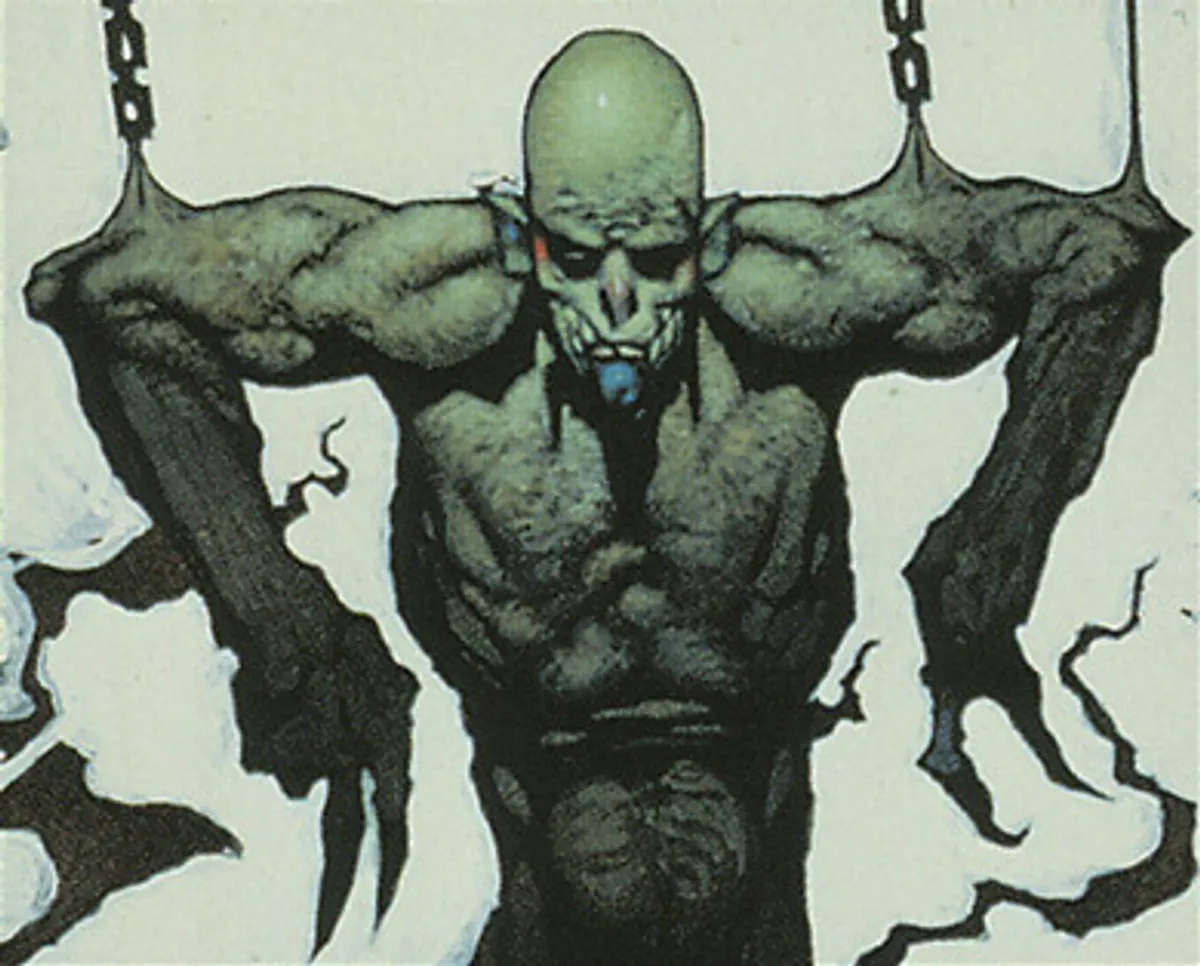
Pick your reanimation effects first. Four mana has become the standard rate for reanimation effects in recent times, which unfortunately prices most new options out of viability. Cards like these just can't compete with the Reanimates and Animate Deads of the world, after all.
The Untouchables (1–2 Mana):
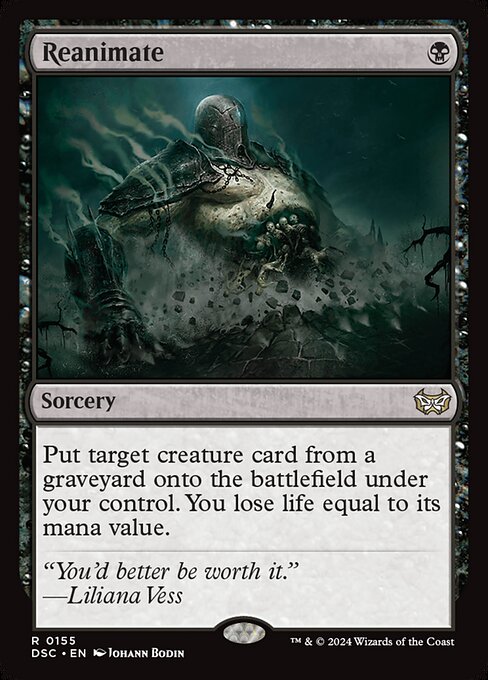
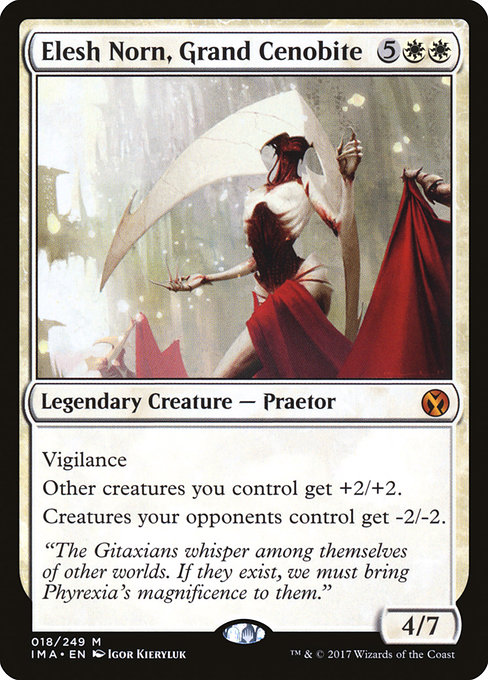
Reanimate costs one black mana, you pay life equal to the creature's mana value, and it's yours. You can get it from your graveyard or anyone else's. The life payment barely matters when you're putting an Elesh Norn, Grand Cenobite or Razaketh, the Foulblooded onto the battlefield on turn two. This is the gold standard. If you own one copy of Reanimate, it goes in every black deck that cares about the graveyard.
Animate Dead is a two-mana enchantment aura; any creature from any graveyard comes back with a minor power reduction. The enchantment text is famously confusing (read the Oracle text, not the card), but the effect is simple: cheap reanimation that sticks around.
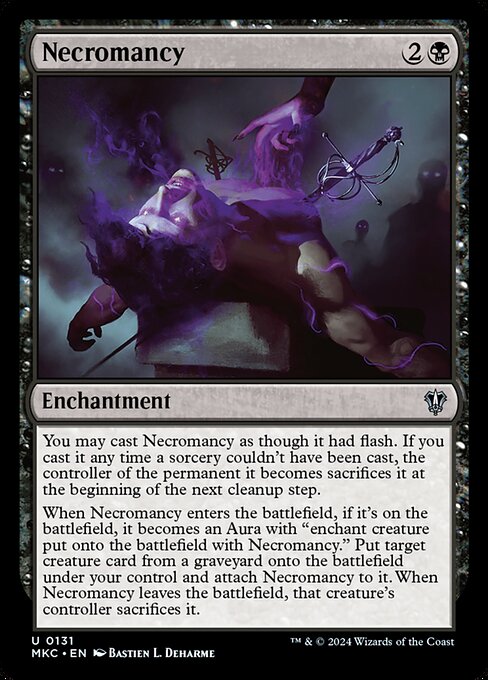
Necromancy's flash makes it the most flexible of all reanimation spells in Commander; you can hold up interaction and reanimate at end of turn with the same card.

The Workhorses (3 Mana):
Victimize trades a creature on the battlefield for two from the graveyard — an absurd rate when the sacrificed body is a token or a dying mill creature. Victimize is a 3-mana sorcery that requires you to sacrifice a creature in the process. In exchange you get two creature cards from your graveyard reanimated into play tapped. This is great value for just 3 mana.
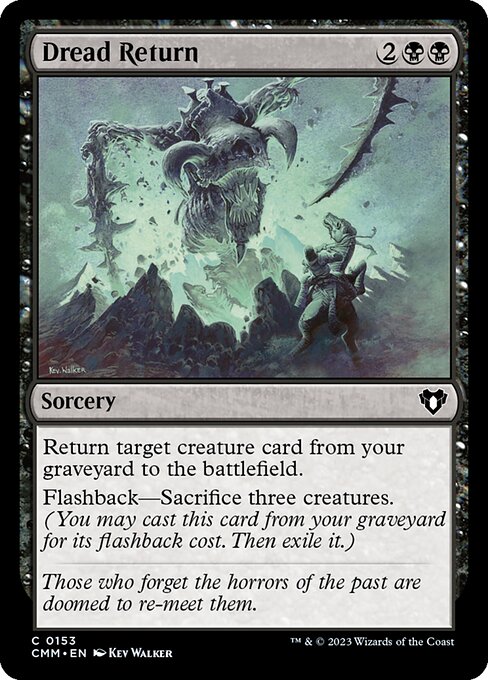
Spells like Dread Return, Persist, Victimize, Living Death, Beacon of Unrest and enchantments like Animate Dead and Dance of the Dead are quite common in reanimate decks.


Filling Your Graveyard: The Enabler Package
The fastest reanimator hands win because the enabler does double duty — it either tutors directly to the graveyard, or it loots away a giant creature you drew naturally while drawing a fresh card to find one. These spells let you do exactly that.
Tutors-to-Graveyard (1–3 Mana):
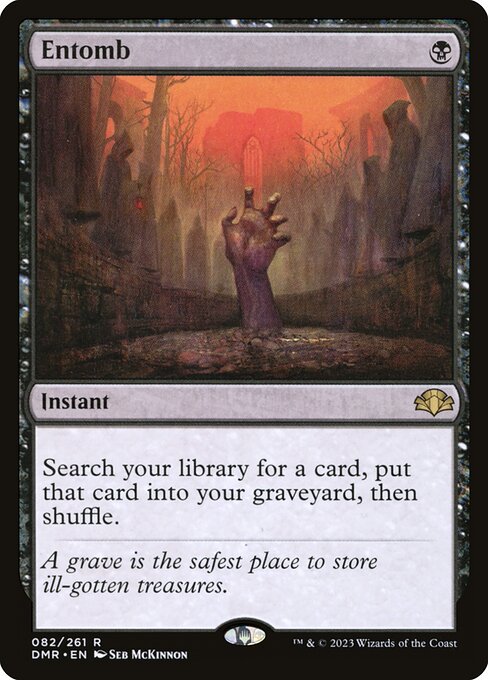
Entomb is one mana, puts any creature from your library straight to the graveyard at instant speed. There is no faster or more efficient way to set up a reanimation target. Play this end of turn, untap, reanimate whatever you grabbed.
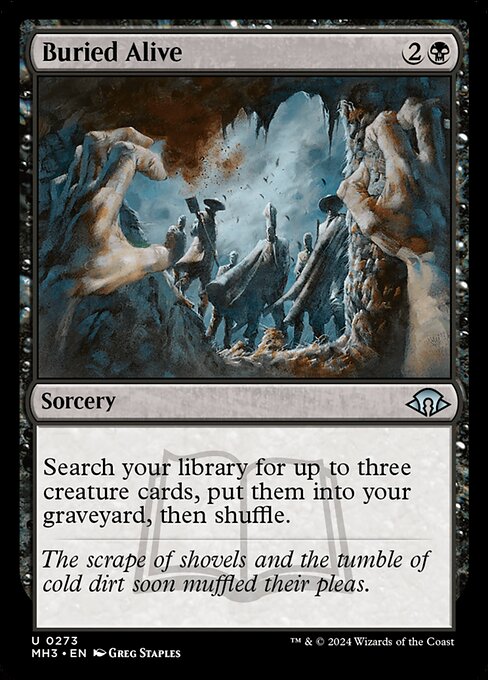
Buried Alive is the Commander cousin — three mana, three creatures, and the entire foundation of any Karador, Ghost Chieftain or Meren of Clan Nel Toth shell. The cost is steeper, but you set up combos and recursion chains in a single cast.
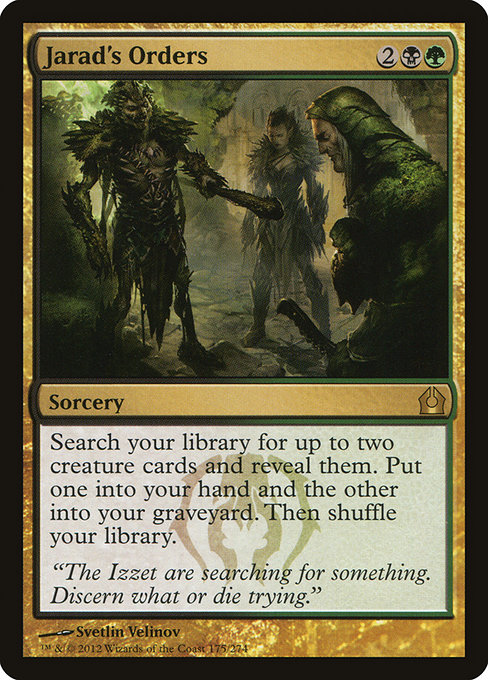
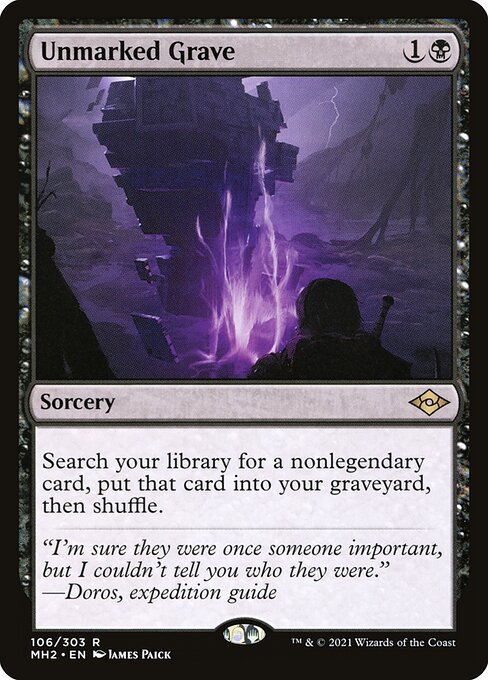
Cards like Entomb, Jarad's Orders, Intuition, Corpse Connoisseur, and Buried Alive all help load the graveyard with specific cards, which the Reanimator player can then revive more easily.
Looting and Discard Outlets (1–2 Mana):
Faithless Looting is the Modern enabler of choice — one red mana, draw two and discard two, then a flashback for the late game. It single-handedly defines the Modern reanimator shell. Cathartic Reunion and Careful Study let you draw and discard.
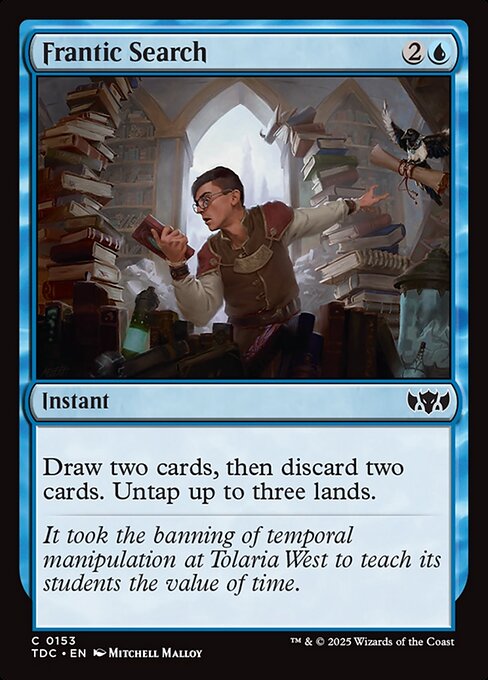
Popular discard outlets include Frantic Search, Careful Study or Ancient Excavation. Mass discard effects like Windfall can also be effective.
Self-Mill (Creatures and Artifacts):
Putting cards en masse from one's own deck into the graveyard is one of the fastest ways to amass a variety of potential reanimation targets. Stitcher's Supplier, Sultai Ascendancy, Hermit Druid, and Dredge effects like Life from the Loam can all assist with this.


Reanimation Targets: Pick High-Impact Creatures
The ideal reanimation target does something the moment it hits the battlefield or warps the game so hard that opponents have to answer it immediately. Don't just grab random fatties. Pick creatures with game-ending enters-the-battlefield (ETB) effects or static abilities that dominate the board.
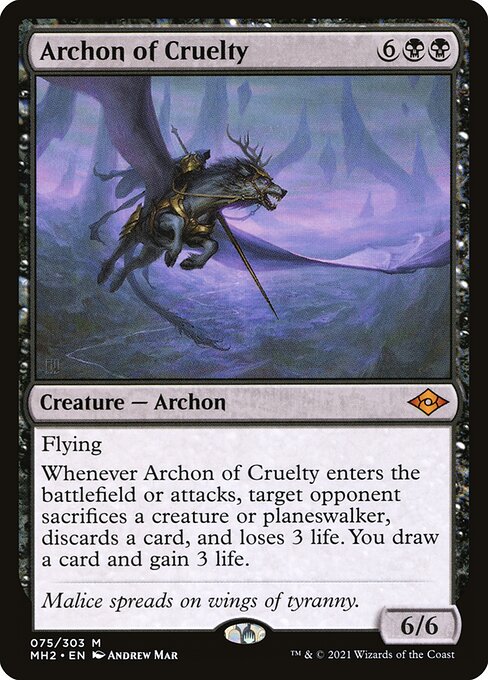
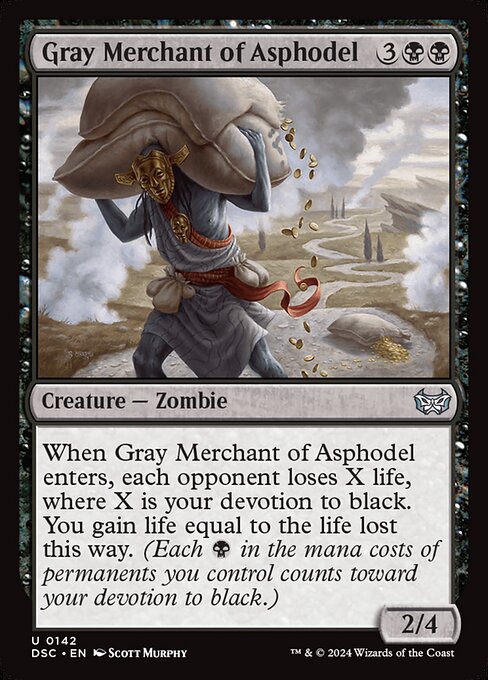
Mikaeus, the Unhallowed is often used to finish the game alongside Triskelion, for example. But besides them there is a wide variety of possible targets: Gray Merchant of Asphodel, Junji, the Midnight Sky, Avacyn, Angel of Hope, Ashen Rider, Sheoldred, Whispering One, Archon of Cruelty, Elesh Norn, Grand Cenobite and a huge range of cards can be mentioned here, but all are very related to the deck's colors and the Commander's proposal.
Archon of Cruelty drains resources on entry. Razaketh, the Foulblooded tutors repeatedly. Vilis, Broker of Blood turns all that life payment into cards. Gray Merchant of Asphodel can kill the whole table if your devotion is high enough.
Mana Curve and Deck Construction
Commander or EDH decks follow the same rules as other decks. The main difference is the number of mana rocks like Sol Ring in the deck, as the format is known for using them a lot. Even with that taken into account, Commander decks usually tend to go from 38 to 40 lands, and the mana curve follows the same principle as the core archetypes we discussed earlier.
For reanimator, your curve is front-loaded: most of your spells are 1–3 mana (tutors, reanimation, discard outlets). Include 8–12 high-mana-value creatures (typically 5–7 mana), fill the rest with ramp and interaction, and land on 38–40 lands depending on your color intensity. In EDH you typically see reanimator working in two ways; it can help speed up creature-based combos by getting high-cost utility creatures onto the battlefield quickly and cheaply (leaving mana available for counter magic to protect the combo), or it aims to set up reanimation engines that help you grind out card advantage as the game goes on.
Win Conditions: Reanimation Engines vs. Beats
Reanimator decks may elect to revive a handful of creatures, keeping them and their powerful effects on the battlefield to overpower their opponents. At other times, they may choose to repeatedly reanimate and sacrifice creatures in and out of play, triggering their powerful enter-the-battlefield abilities multiple times. Because this strategy allows players to avoid paying high mana costs, some players may also choose to reanimate creatures that form infinite combos with each other.
Infinite Combo Line Example: Mikaeus, the Unhallowed + Triskelion: Triskelion can remove counters from itself to deal damage to any target. By dealing damage to a player, then using the counters on itself to target itself with lethal damage, it will trigger Mikaeus's ability, which brings the artifact back with another counter. This can be repeated to deal lethal damage to each opponent, a few points of damage at a time.
Others rely on grinding value: recur Sun Titan, Karmic Guide, and sacrifice outlets to build card advantage and board presence over time.
Graveyard Hate and Resilience
Reanimator is a powerful strategy, and variations of it are prevalent in many formats. Because of this, most other decks in a given format will commonly have ways of interacting with the graveyard to disrupt reanimation, usually in the Sideboard.
This includes potent graveyard hate, such as Relic of Progenitus, Tormod's Crypt, and Leyline of the Void, or cards that prevent creatures from entering the battlefield in ways relevant to reanimation, such as Containment Priest and Grafdigger's Cage.
Build redundancy: run multiple tutors, multiple reanimation spells, and consider backup threats that play outside the graveyard. If your graveyard is exiled, you should still have a game plan.
Color Choices and Commander Selection
Most of the time the deck is black with some other color, but there are also cases of reanimate decks without black. Reanimator strategies almost always include the color black.
Since Commander's early days, decks with the theme of reanimating creatures from the graveyard have been recurring, and the more the years pass, the more tools this archetype gains with new sets. Popular reanimator commanders include Meren of Clan Nel Toth, Muldrotha, the Gravetide, Karador, Ghost Chieftain, and The Scarab God. Pick a commander whose color identity and abilities support either fast tutoring, efficient reanimation, or sacrifice synergies.
The Spike's Verdict
EDH reanimator is efficient, resilient, and scales with your card pool. There's no wasted interaction or filler creatures—every card either fills your graveyard, brings something back, or demands an immediate answer. The archetype punishes slow tables and rewards tight sequencing. If you're piloting it, your decisions matter: which creature dies first, which tutor you hold, when you crack your graveyard tutors. If you're facing it, you need permanent-based graveyard hate and exile-based removal, not bounce or unsummon effects. That's the game theory.



Comments
Join the conversation.